


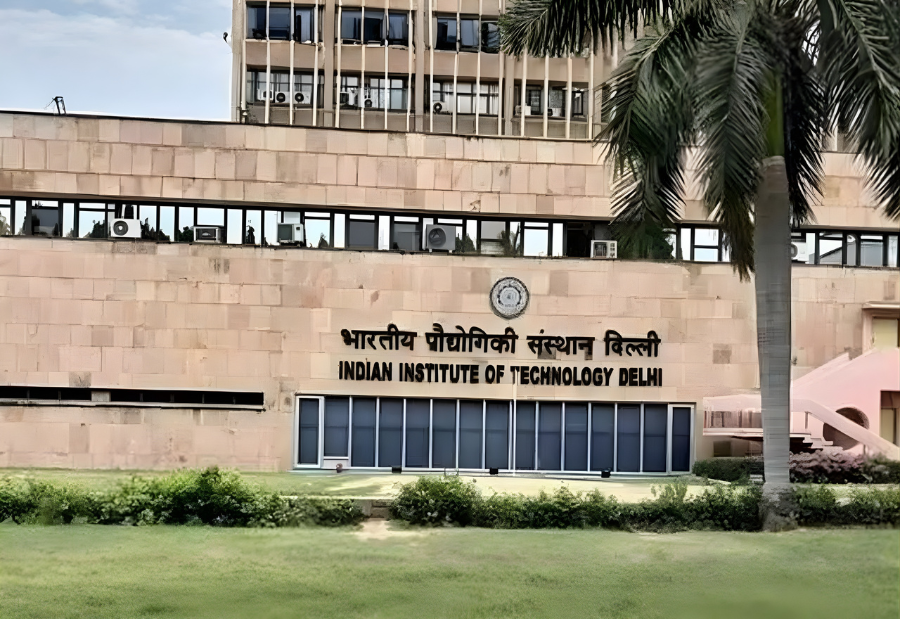
A new development from India’s research community is pushing artificial intelligence beyond data analysis and into real laboratory work. Researchers at IIT Delhi have developed an AI system called AILA or Artificially Intelligent Lab Assistant that can conduct real scientific experiments like a human scientist.
The breakthrough has been detailed in a recent study published in a global scientific journal and focuses on automating atomic force microscopy, a technique used to study materials at a microscopic level. Unlike most AI systems that only analyse data or answer questions, AILA can independently run experiments, control lab equipment, and analyse results.
The project was developed through a collaboration between IIT Delhi and research teams from Denmark and Germany. The system has been trained to manage Atomic Force Microscopes, make real time decisions during experiments, and generate findings without human intervention.
“AILA helps me with my daily tasks and makes my research much faster,” said Indrajeet Mandal, a PhD student at IIT Delhi and the first author of the study, who works under the guidance of Prof. M. Anoop Krishnan and Prof. Nitya Nand Goswami. “Before, it would take a full day to adjust the microscope settings. Now, the same task is completed in just 7 to 10 minutes,” he added.
Explaining the importance of the work, Prof. Anoop Krishnan said, “Previously, AI could only help with tasks like writing reports. Now, it can actually do science designing experiments, running equipment, and interpreting results.”
The Atomic Force Microscope is one of the most critical tools in material science research. Prof. Nitya Nand Goswami noted, “AILA’s ability to carry out these experiments shows how AI can play a huge role in scientific research.”
The study also highlighted challenges. While AILA performs well in answering scientific questions, it faces difficulties in real lab environments. “It’s the difference between knowing the rules of driving and actually navigating through busy city traffic,” said Mandal.
Researchers also observed safety concerns, as AILA occasionally deviated from instructions, which could lead to errors. The team stressed the need for stronger safety measures as laboratories move towards automation.
The research aligns with India’s AI for Science initiative. The government has announced new funding through the Anushandhan National Research Foundation to support AI driven research across the country.
“Autonomous lab assistants can give more people access to advanced research tools, democratizing science,” said Prof. Krishnan.
Also read: Viksit Workforce for a Viksit Bharat
Do Follow: The Mainstream formerly known as CIO News LinkedIn Account | The Mainstream formerly known as CIO News Facebook | The Mainstream formerly known as CIO News Youtube | The Mainstream formerly known as CIO News Twitter
About us:
The Mainstream is a premier platform delivering the latest updates and informed perspectives across the technology business and cyber landscape. Built on research-driven, thought leadership and original intellectual property, The Mainstream also curates summits & conferences that convene decision makers to explore how technology reshapes industries and leadership. With a growing presence in India and globally across the Middle East, Africa, ASEAN, the USA, the UK and Australia, The Mainstream carries a vision to bring the latest happenings and insights to 8.2 billion people and to place technology at the centre of conversation for leaders navigating the future.