


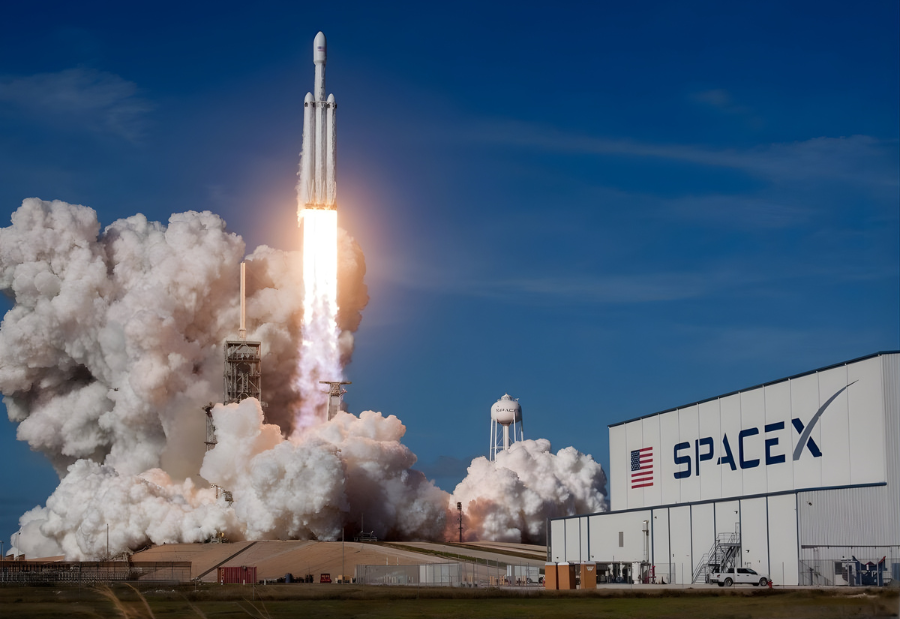
After years of staying private, Elon Musk’s SpaceX is now preparing for what could become the largest initial public offering ever, a move that is reshaping conversations across the global technology and space sectors.
Founded in 2002, SpaceX has changed how the world approaches space travel. A public listing would open the company to a much wider group of investors, including individual buyers, while giving early shareholders a clearer path to cash out and realise significant gains.
SpaceX is owned by Musk along with several investment funds, with Alphabet also among its shareholders. A listing would unlock deeper capital markets and add liquidity, something analysts say matters for a business that demands constant large scale investment. As one investment expert noted, “This is a capital intensive business.” He added, “SpaceX has never had any difficulty raising funds in the private market, but public markets are undoubtedly larger. Liquidity is important as well, it can help with making acquisitions.”
According to financial reports and market data platforms, the IPO could raise more than $30 billion. That figure far exceeds the roughly $10 billion SpaceX has raised privately so far and could push its valuation to around $1.5 trillion.
Timing also plays a role. The global space economy was valued at $630 billion in 2023 and is expected to triple by 2035, according to McKinsey and the World Economic Forum. SpaceX sits at the centre of this growth. It dominates commercial launches with reusable rockets and runs the largest satellite network through Starlink.
Experts describe the company as a rare case. It is “kind of a black swan event and unique so that we can’t draw too many parallels across the whole space economy,” said Clayton Swope of the Center for Strategic and International Studies.
For years, Musk rejected the idea of going public, viewing SpaceX as central to his long term goal of sending humans to Mars. The company is investing heavily in Starship, the largest rocket ever built, and in plans for space based data centers for AI. New capital would help accelerate these ambitions. “The answer is pretty straightforward,” said Swope. “He wants to accelerate the flywheel for his vision of humanity on Mars.”
Going public, however, brings trade offs. Greater transparency and pressure to show profits could limit SpaceX’s high risk experimentation culture. “I speculate that would ground SpaceX somewhat in the near term,” said Mason Peck, an astronautical engineering professor at Cornell University. Still, others believe investors will continue to back Musk’s long term vision, seeing it as key to SpaceX’s success.
Also read: Viksit Workforce for a Viksit Bharat
Do Follow: The Mainstream formerly known as CIO News LinkedIn Account | The Mainstream formerly known as CIO News Facebook | The Mainstream formerly known as CIO News Youtube | The Mainstream formerly known as CIO News Twitter
About us:
The Mainstream is a premier platform delivering the latest updates and informed perspectives across the technology business and cyber landscape. Built on research-driven, thought leadership and original intellectual property, The Mainstream also curates summits & conferences that convene decision makers to explore how technology reshapes industries and leadership. With a growing presence in India and globally across the Middle East, Africa, ASEAN, the USA, the UK and Australia, The Mainstream carries a vision to bring the latest happenings and insights to 8.2 billion people and to place technology at the centre of conversation for leaders navigating the future.